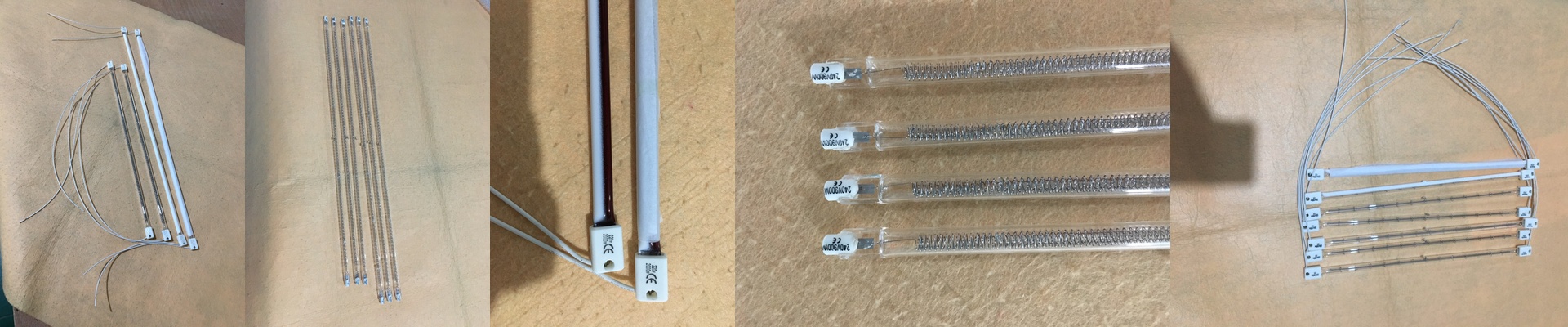
Machine Halogen Lamps: Precision Heat, Built for the Grind
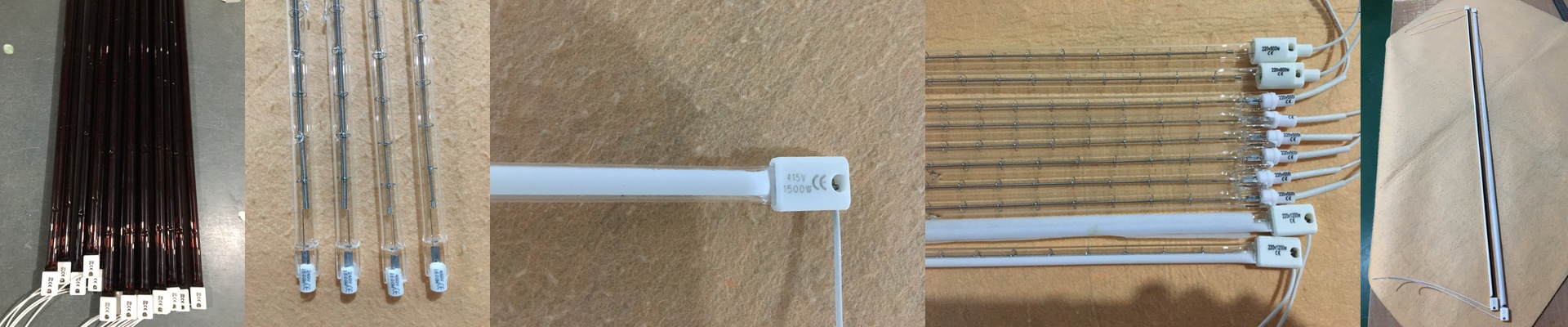
We build these lamps for one simple reason: to give you heat you can actually control. Right where you need it. These aren’t your everyday bulbs. They’re heating elements first and foremost, engineered to run hard inside tight machine spaces. High voltage, high watt density, predictable output—all packed into a small footprint.
Power, Voltage, and Size—Why It All Matters
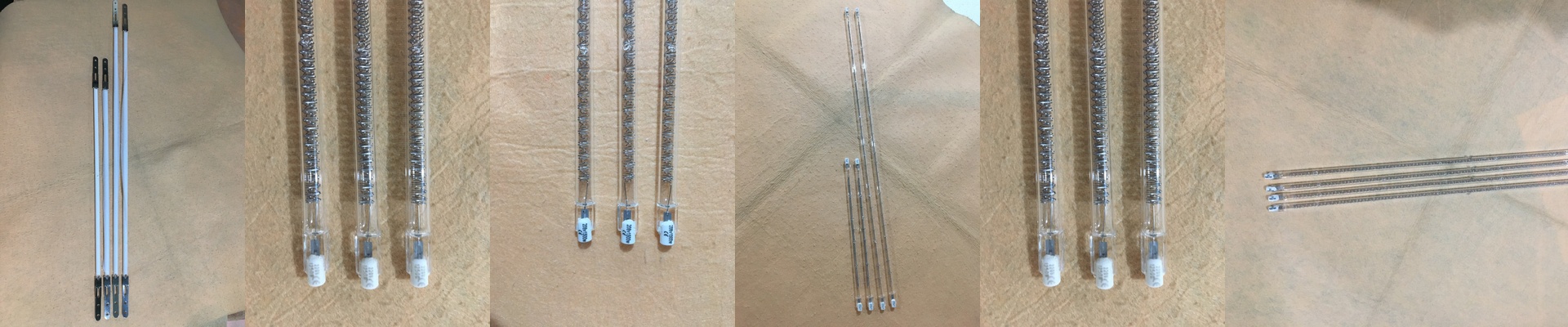
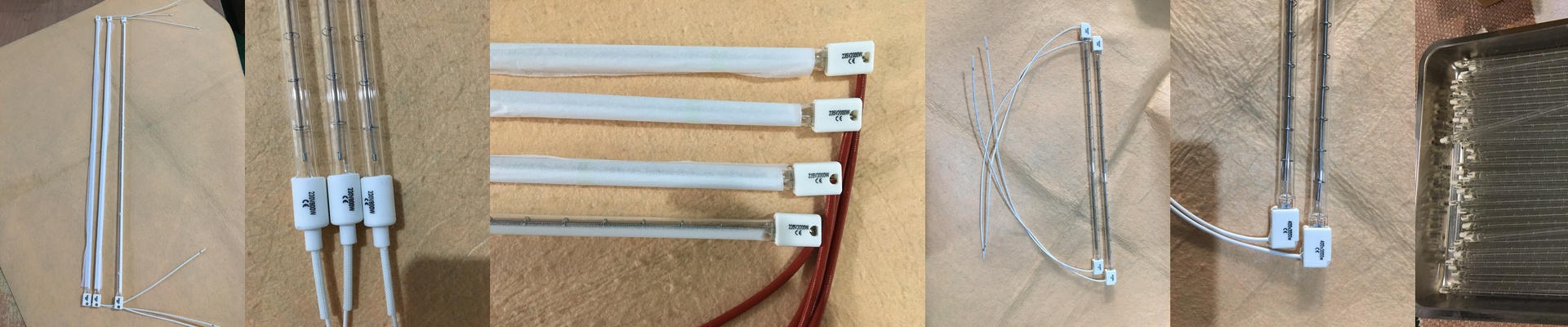
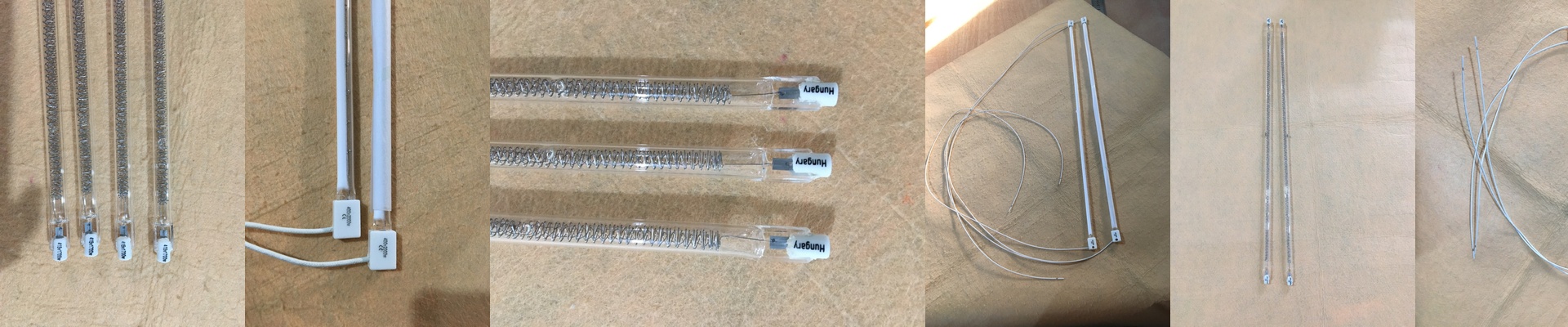
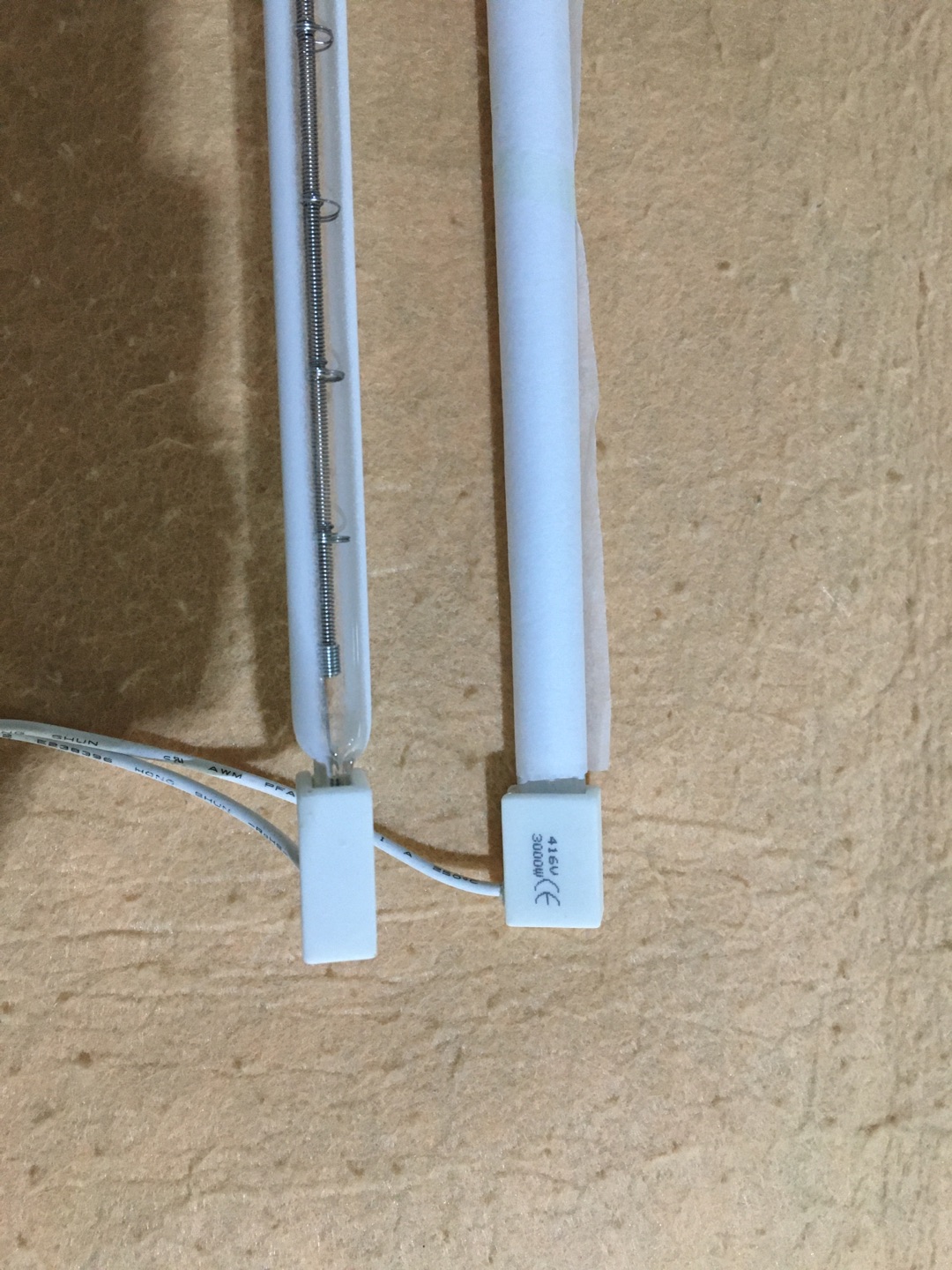
Here’s the thing: these lamps are small, but they’re seriously powerful. Take the 300mm quartz tube, for example. It’s rated at 2500W and typically runs at 400V. That voltage isn’t random. It keeps the current lower for the same wattage, which means you can use thinner wiring and avoid voltage drop across connections. And the 300mm length? It’s the sweet spot. Long enough to spread heat evenly. Short enough to slip into conveyor tunnels, shrink-fit stations, and compact chambers.
Built to Take the Heat
The quartz tube is the heart of the whole setup. It handles the intense filament temperature and shrugs off thermal shock when the lamp cycles on and off. The halogen cycle keeps everything stable, redepositing material back onto the filament. That means consistent performance over the life of the lamp. Plus, many versions have a reflective coating on part of the tube. It directs infrared energy forward, so more heat goes where you want it and less is wasted sideways. And the R7s base? It’s the standard for a reason. Two contacts, secure and reliable, built for repeated insertion and removal on the production line. Replacement is simple—just unclip and swap.
Made to Work Inside a Machine
In a machine setting, this lamp isn’t a disposable part. It’s a component. The high-density infrared output responds fast, so you hit setpoint quickly and keep cycle times tight. That’s why you’ll see these in plastic processing—like PET blowing and heating preforms—and on packaging and assembly lines where parts need heating on the fly.
The Trade-Off, and How to Make It Work
Let’s be real: packing 2500W into a 300mm tube creates intense local heat. You’ve got to manage the thermal load around it. Plan for proper clearance, airflow, and shielding. When you do, the lamp becomes a reliable, drop-in heat source that holds steady through thousands of cycles.